The official website of Department of Chemistry is: http://chem.pmf.kg.ac.rs
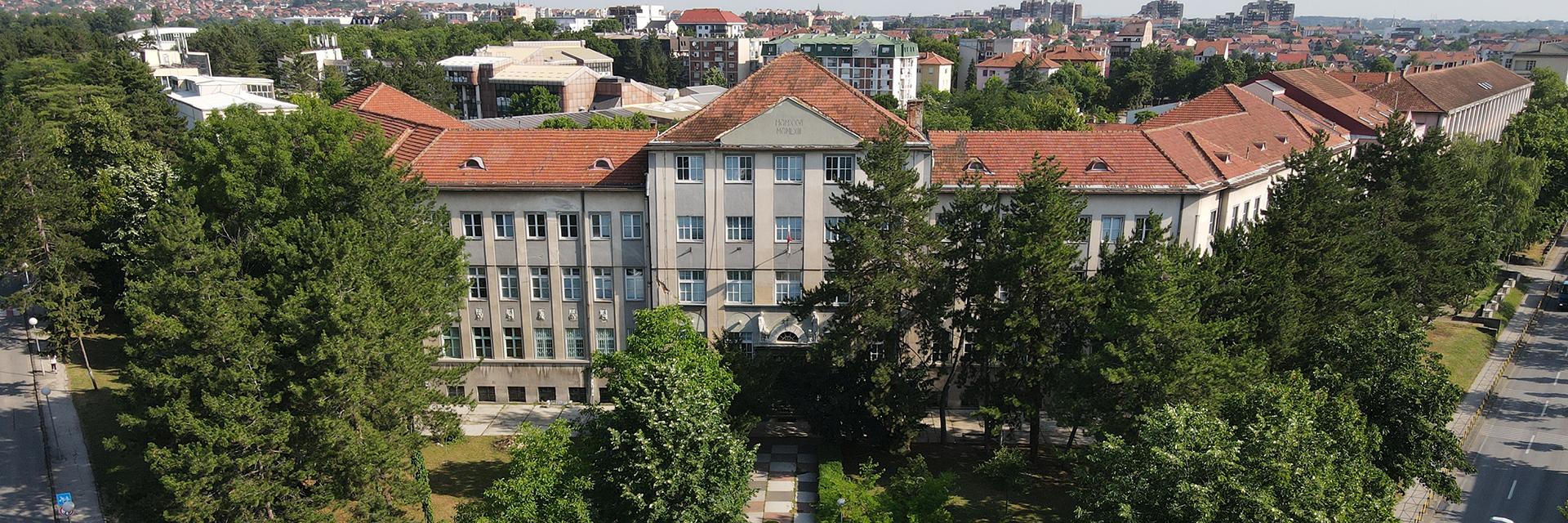
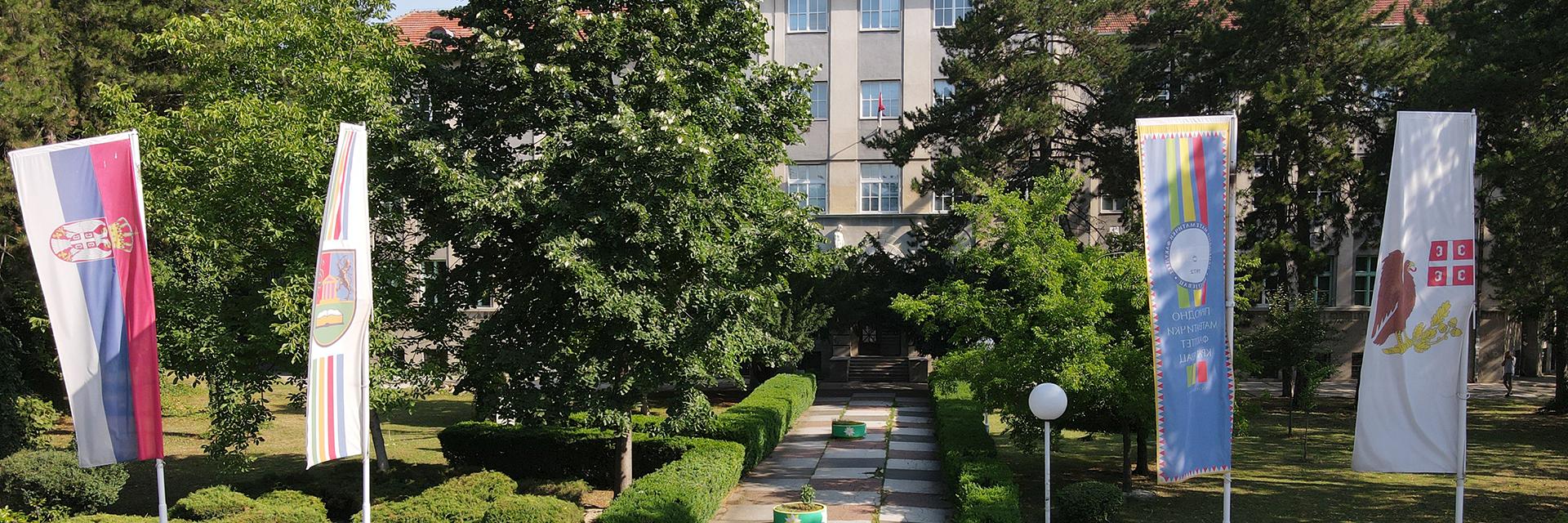
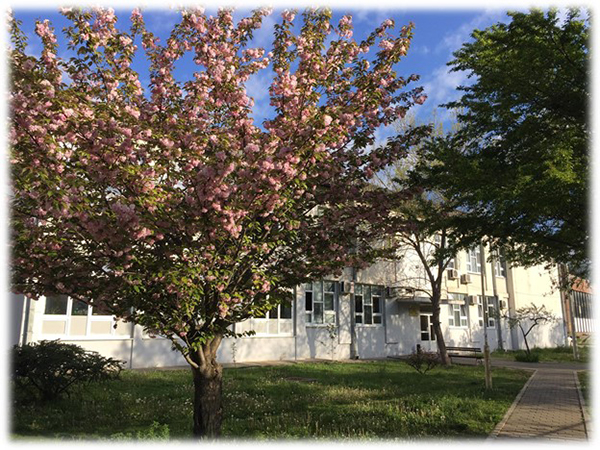
Department of Chemistry, one of the organizational units of the Faculty of Sciences in Kragujevac, was founded in 1974. Department is located within a separate building. Theoretical classes are performed in two modernly equipped classrooms and practical classes are performed in six student laboratories. Department also has well-equipped scientific and research laboratories for inorganic, organic, analytical chemistry, biochemistry, and environmental chemistry. Scientific-research equipment of Department consists of a NMR spectrometer, infrared spectrophotometer, UV-Vis spectrophotometers, gas chromatographs, atomic absorption spectrophotometer, HPLC, as well as other devices.
At Department of Chemistry, students can enroll in academic studies that are in accordance with the Law of Higher Education, which is further harmonized with the Bologna Declaration.
There are three degrees of academic studies:
Future students who choose to enroll in chemistry can attend all three of these studies, in accordance with the previously acquired level of education.
Upon completion of Bachelor Academic Studies lasting 4 years, depending on the selected module, the student acquires an expert name:
After completing the first degree of study, the student acquires a title that allows him to apply for a job in the labor market or to continue his master's degree.
Master's in academic studies, together with previously completed basic studies, last 5 years. After completing a Master's in academic studies, depending on the chosen module, the student acquires an academic name:
Acquiring the title of Master chemist, after five years, provides the opportunity to apply for a job in the labor market or in high and elementar schools or under certain conditions, enroll in doctoral studies.
Doctoral academic studies last three years A student who completes this degree of study receives the title of Doctor of Sciences - Chemical Sciences.
Department of Chemistry had a 65 employees, of whom, 25 teachers and 7 assistants were participating in the implementation of teaching activities. Technical support for the curriculum and scientific process is provided by 12 professional associates. On scientific and research projects at Department of Chemistry, 28 young researchers are engaged.
Most of Department's teachers and associates are involved in the scientific and research work of the Ministry of Education, Science, and Technological Development of the Republic of Serbia. Department's researchers are also involved in the realization of international projects and bilateral cooperation projects. Employees of Department of Chemistry cooperate with a large number of scientific institutions in Serbia and abroad where our diploma is recognized (USA, China, Germany, France, Spain, England, Austria, Hungary, South Africa, Canada, etc.) and where many of our students successfully work and obtain a Ph.D. in chemical sciences.
SCIENTIFIC AND RESEARCH WORK
From its inception to the present day, intensive scientific and research work aimed at developing science and creativity has been implemented at Department of Chemistry, perfecting scientific rejuvenation, as well as introducing students into scientific research.
Research work can be divided into fields: inorganic chemistry, organic chemistry, analytical chemistry, biochemistry, and theoretical chemistry.
Organic chemistry: Scientific research is in the field of organic and bioorganic chemistry, with the subject of the research being the synthesis of different organic compounds, primarily nitrogen heterocyclic, phenol, and polyphenol compounds. Nowadays synthesis is mainly directed towards the principle of green chemistry. Also, the compounds acquired are examined by other scientific and research institutions for anticancer and antimicrobial potential.
The results of these studies were published in international journals such as:
Green Chemistry, Tetrahedron, Medicinal Chemistry, European Journal of Medicinal Chemistry, Bioorganic Chemistry, and others.
Inorganic chemistry: Scientific research work in the field of inorganic and bioinorganic chemistry is based on the synthesis and characterization of mono-and polynuclear transition metal complexes (platinum(II), palladium(II), gold(II/III), rhodium(III), osmium(II), copper(II), silver(I) and others), with different types of donor atoms. The mechanism of substitutional reactions of these complexes with biologically important nucleophiles (amino acids, peptides, nucleotides) is examined with experimental methods for slow and rapid chemical reactions. The complex's interactions with the DNA molecule and proteins are then examined with absorbent and emission methods, as well as with molecular docking. Complexes that show potential are further examined for anticancer and antimicrobial activity in co-operation with other research groups at the University of Kragujevac.
The results of these studies were published in international journals such as:
Inorganic Chemistry, Inorganic Chemistry Frontiers, Coordination Chemistry Review, Gold Bulletin, Dalton Transaction, and the others.
Analytical chemistry: Scientific studies within the research group include electrochemical characterization of unmodified and modified electrodes whose sensors are made of natural minerals, biopolymers, synthetic polymers, and precious metals (platinum, palladium) with the aim of a further application for the quantitative determination of different types of compounds in water and non-water solvents, as well as for their practical application. Electrochemical research is also dedicated to the development, testing, and application of carbon paste-based biosensors. Testing of new carriers based on natural and synthetic polymers for controlled discharge of multipurpose drugs includes optimization of composition and characterization of prepared carriers, studies of their efficacy during drug discharge, also further application of these systems in medicine and pharmaceuticals. Within the scientific research group, different methods of extraction of biologically active compounds from food samples and pharmaceutical formulations are optimized by applying computer software to obtain as much extraction as possible. Certain isolated active compounds are further synthetically modified to improve biological activity. Also, the development, optimization, and validation of chromatographic methods for examining real samples are being developed to control the quality and safety of food and pharmaceutical products present on the market.
The results of these studies were published in international journals such as:
Plant foods for human nutrition, J. Food Compos Anal, Molecules, and others
Biochemistry: Scientific and research work is in the field of biochemistry and medicinal chemistry. The subject of research is the rational design of bioactive compounds, based on understanding the biophysical principles of inhibition or antagonism of enzymes or receptors at the level of molecular targets, signal transduction, and epigenetics, generating 3-D QSAR, COMBINE, and 3-D pharmacophoric studies, and on defining bioactive conformations of inhibitors and receptors based on the structure of the molecular target (Structure-Based Drug Design) or bioligand (Ligand-Based Drug Design). The consequence of the protocol is the design and synthesis of new biomolecules as derivatives of secondary metabolites, especially from the coumarin group, as well as biochemical and toxicology evaluation. In addition, there is active engagement in testing chemical composition and the potential application of medicinal plants per their traditional use. The focus of the research is mainly on defining phenol profile (phenolic acids and flavonoids) with spectrophotometric and chromatographic methods of extracting medicinal plants that can be applied in the treatment or prevention of diseases associated with oxidative stress. In this sense, several in vitro and in vivo methods are applied to evaluate the antioxidant activity of natural compounds, plant extracts, and synthesized compounds Also, the areas of research is an optimization of chromatographic conditions, isolation, structural identification, and biological activity of secondary metabolite plants (from classes of naftohynon, flavonoids, methoxy flavonoids, monoterpenes, and sesquiterpenes). One part of the research so far has been dedicated to applying liquid high-pressure chromatography (HPLC-PDA) and gas chromatography-mass spectrometry (GC-MS) in identifying and quantifying active secondary metabolites from plant extracts and isolated ether oils. They are also investigating human genome mutations caused by infection with the SARS-CoV-2 virus.
The results of these studies were published in international journals such as:
European Journal of Medicinal Chemistry, Biochemical Pharmaceuticals, Journal of Chemical Information and Modeling, Oxidative Medicine and Cellular Longevity, RSC Advances, Industrial Crops and Products, Excli Journal, South African Journal of Botany, Plants, and others.
Theoretical chemistry: Scientific research is in the field of theoretical physical, computer, and mathematical chemistry. Research involves exploring different chemical phenomena such as chemical reaction mechanisms (e.g., Colbe-Schmidt's reactions with phenoxides and alkaline metals, Heck's reactions, etc.), using ab initio and DFT methods. Also, research in this area can be divided into three directions. The first examines molecular descriptors representing numbers or sets of numbers, which are the holders of information about the structure of molecules. They make it easier to find the connection mentioned. Particular attention is paid to topological molecular descriptors that collect information about the connection between atoms in the molecule. The second course of research focuses on uncovering structural details that affect the distribution of π-electrons and the thermodynamic stability of polycyclic aromatic molecules. The third direction is aimed at examining existing and finding new, improved measures to determine the similarities of molecules.
The results of these surveys were published in international journals such as:
Angewandte Chemie International Edition, Polycyc., Comp., Chem. Pap., Commun. Math . Comput. Chem. and others.